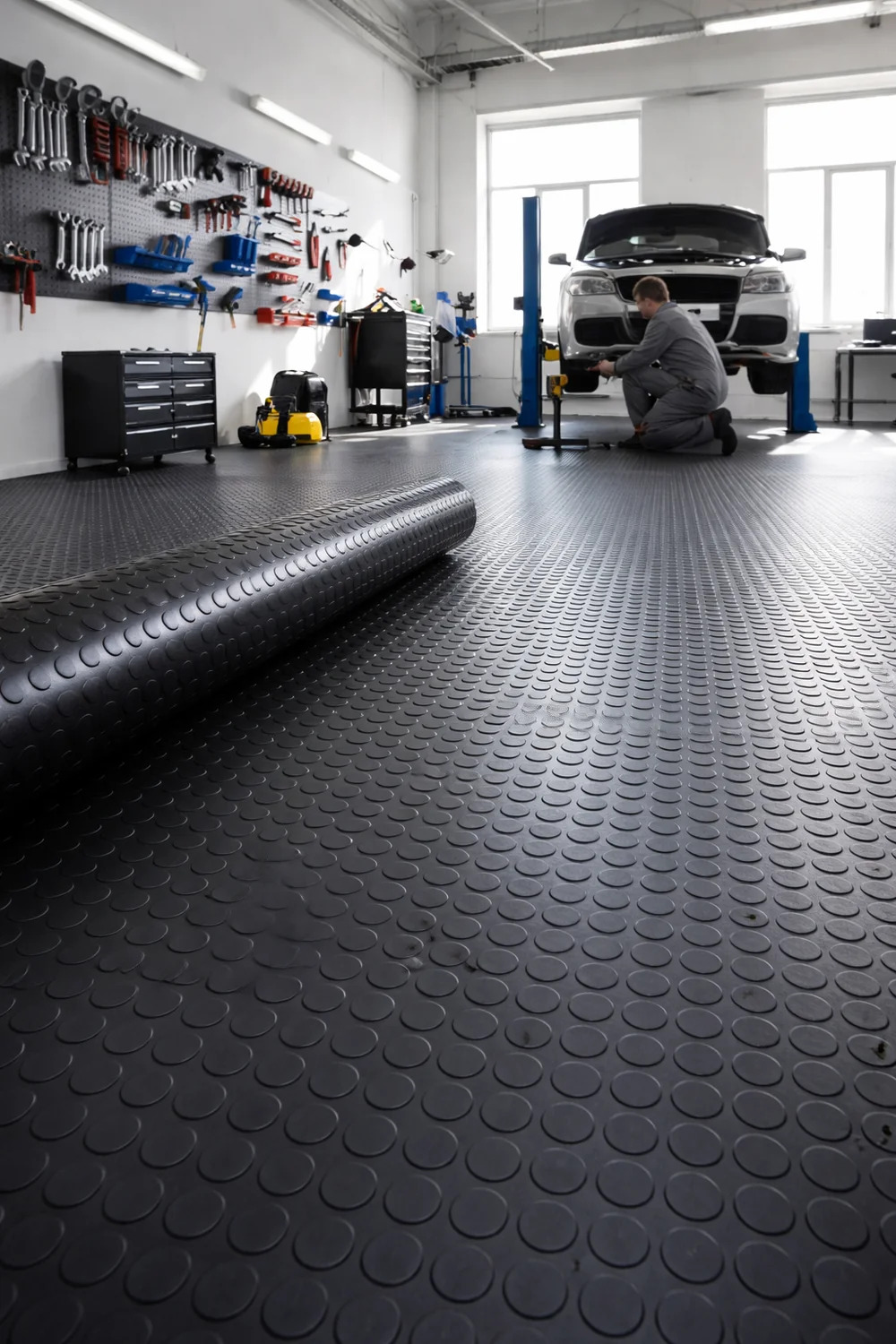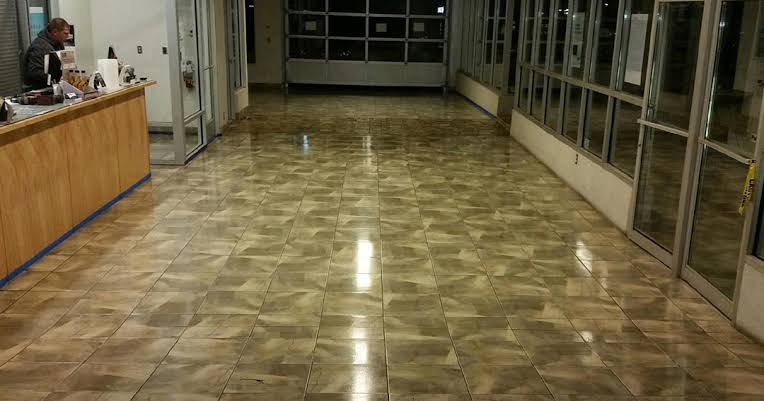

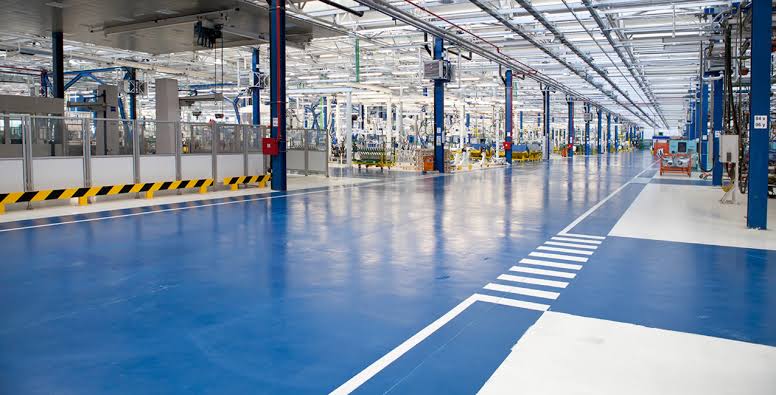

Oil Resistant Flooring in the Midlands for Floors That Take a Daily Soaking
Oil resistant flooring in the Midlands has to solve a problem that starts before the coating is even ordered. Concrete that’s been absorbing oil for fifteen years isn’t a surface you can simply paint. The contamination sits several millimetres deep, and it migrates upward as the slab warms. Grind it, prime it and coat it on a Friday, and by Monday there’ll be dark patches bleeding through the new finish where the oil has pushed back out. That’s not a product failure. It’s a preparation failure, and it’s the single most common reason workshop floors get done twice.
So we test the depth before we quote. Ron cores or scarifies a sample area, works out how far the contamination actually goes, and specifies preparation that reaches sound concrete rather than guessing at it. Sometimes that means shot blasting. Occasionally it means removing more slab than anyone expected. Either way, you’ll know before you commit, and we’ll price it honestly. Workshops, depots and plant rooms across Westmeath, Offaly and Dublin have had that conversation with us, and several have come back repeatedly — as our customer testimonials show.
Got a floor that’s soaked through? Call Ron on 086 2631652 for a free contamination assessment.
Why Oil Destroys Ordinary Floor Coatings
Understanding the mechanism explains why the cheap quote never lasts.
- Oil acts as a release agent. It sits between the resin and the concrete and prevents any chemical bond forming. The coating then sits on top rather than sticking, and the first forklift turn lifts it.
- Contamination migrates upward. Warm concrete pushes absorbed oil toward the surface. That’s why bleed-through appears days or weeks after installation, not immediately.
- Hydraulic fluid and brake fluid attack the resin itself. These are aggressive on standard epoxy, causing softening and blistering over time. Engine oil is comparatively mild by contrast.
- Diesel penetrates further than most people expect. It’s thin, it travels, and it reaches deeper into porous concrete than heavier lubricants do.
- Bare concrete stains permanently. Once oil is in, it doesn’t come out. Cleaning removes the surface film and nothing more. Because of all that, oil-contaminated floors need a different preparation strategy and a different primer. The topcoat is almost the easy part.
Oil Resistant Flooring Systems We Install
The right build depends on what’s spilling, how often, and how badly the slab is already contaminated.
- Oil-tolerant epoxy primers. These are formulated to wet out and bond to lightly contaminated concrete where a standard primer would fail. They’re not magic, and they won’t rescue a heavily saturated slab, but on moderate contamination they save considerable preparation cost.
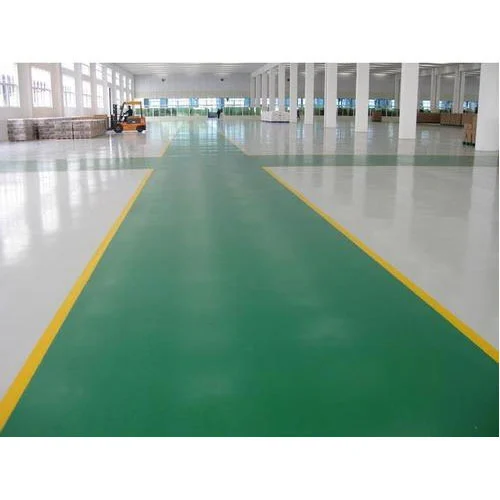
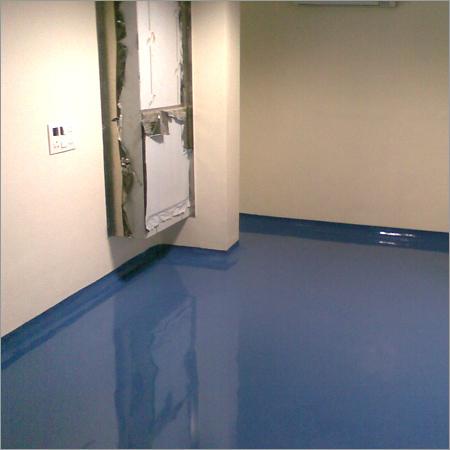
- High-build epoxy coatings (400–800 microns). The standard specification for workshops and engineering bays. Two-pack epoxy resists mineral oils, greases and coolants well, cleans easily and takes vehicle traffic comfortably.
- Novolac epoxy systems. A step up in chemical resistance. Where hydraulic fluid, brake fluid or fuel additives are handled daily, novolac holds up where standard epoxy softens.
- Polyurethane topcoats. Better resistance to solvents, hot spillage and aggressive degreasers. We often finish with PU over epoxy body coats for this reason.
- Epoxy mortar screeds (4–6mm). Where the slab has broken down under years of oil attack, a trowel-applied screed rebuilds the surface entirely. This is common in older service pits and inspection bays.
- Anti-slip broadcasts. Oil on any smooth floor is dangerous. Graded aggregate gives real grip in wash bays and around lifts. We choose the grade carefully, since oily floors need texture that still cleans.
- Bunded and containment detailing. Chemical stores and decanting areas need coved upstands and full containment. That work overlaps with our chemical resistant flooring systems.
Darker colours hide staining between cleans, though lighter tones make leaks easier to spot early. It’s worth deciding which matters more to you.
How We Install Oil Resistant Flooring in the Midlands
Preparation dominates this job more than any other flooring type we do.
Free Survey and Contamination Testing
Ron visits and assesses how deep the oil has penetrated, usually by scarifying test patches in the worst-affected areas. He’ll also check moisture, slab hardness and drainage falls.
You then get a written, itemised quote. Preparation, decontamination, repairs, primer, body coats and topcoat are all priced separately, so you can see where the cost actually sits.
Degreasing and Deep Cleaning
Surface oil comes off first with industrial degreasers and hot pressure washing. This doesn’t remove absorbed contamination, but it stops us dragging surface oil deeper during grinding.
Drains and gullies get cleared at the same time, because they’ll otherwise recontaminate the floor as soon as it’s washed.
Mechanical Removal of Contaminated Concrete
This is the decisive step. We remove concrete until we reach sound, uncontaminated material.
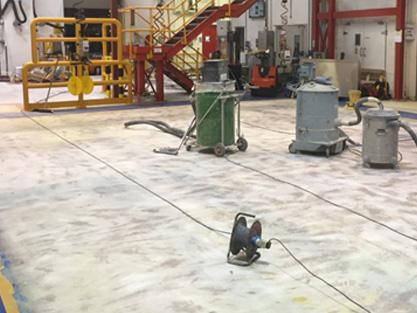
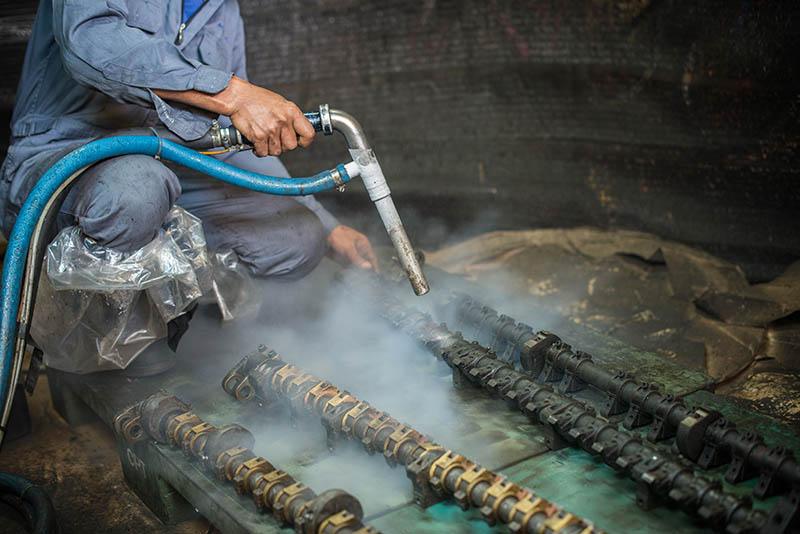
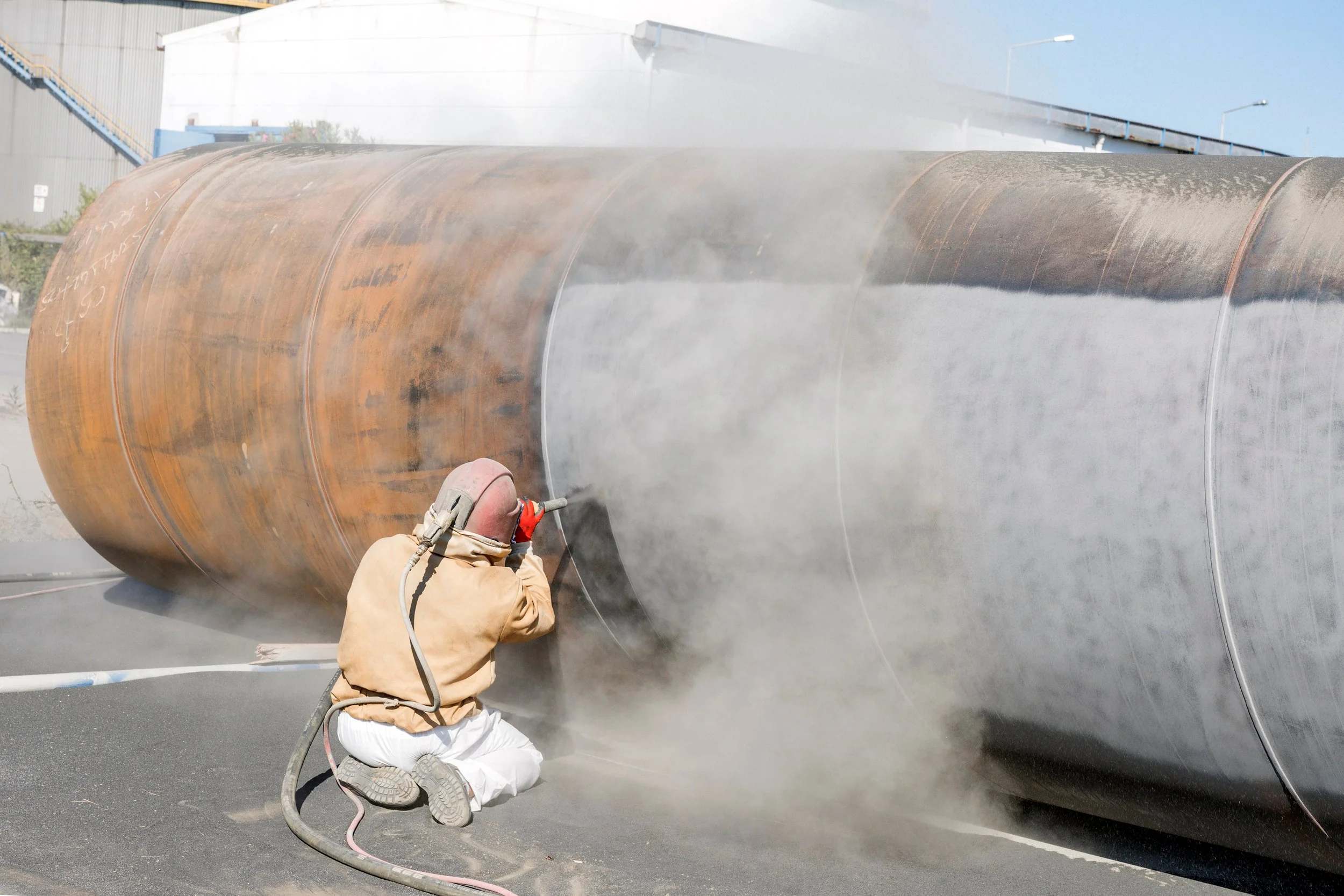
Dust free shot blasting handles large areas quickly and gives an even profile. Where deeper removal is needed, diamond grinding and scarifying take out more material in the worst zones. Everything runs through H-class extraction.
Our full floor preparation method is genuinely the difference between a floor that lasts a decade and one that bleeds through in a fortnight.
Repairs, Pits and Drainage
Service pits, inspection bays and drainage channels get particular attention, because they’re where oil concentrates.
Spalled concrete is cut back and rebuilt. Cracks are filled or stitched. Falls to drainage are corrected where water has been ponding. See our concrete floor repairs and mastic floor joint repairs pages for the detail.
Old failed coatings come off first through our epoxy floor removal service.
Priming and Sealing
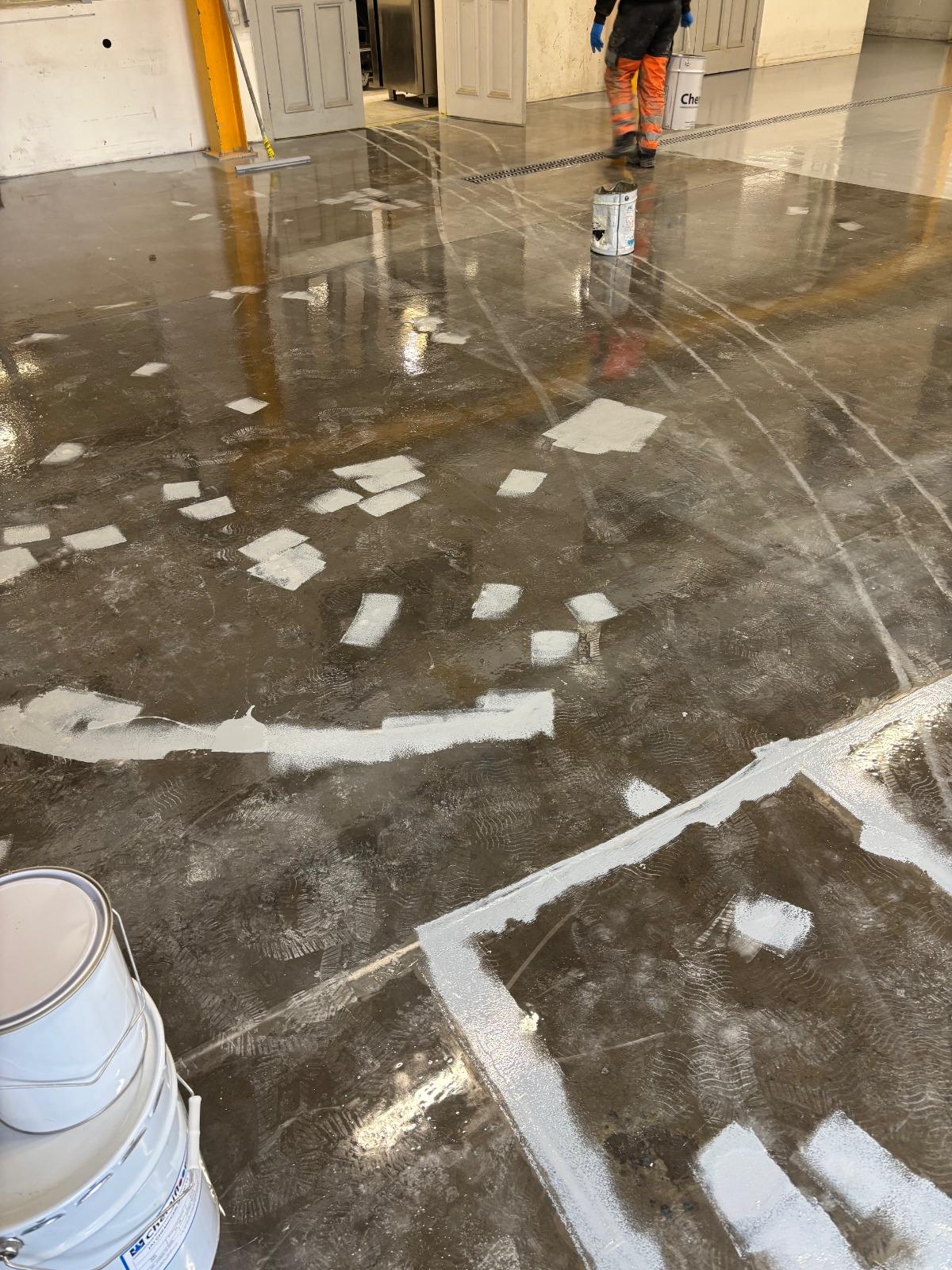
An oil-tolerant epoxy primer goes down and penetrates the open surface. On badly affected slabs we sometimes apply a second primer coat, then test a small area before committing to the full floor.
That test panel matters. It costs a day and it prevents a very expensive mistake.
Coating and Finishing
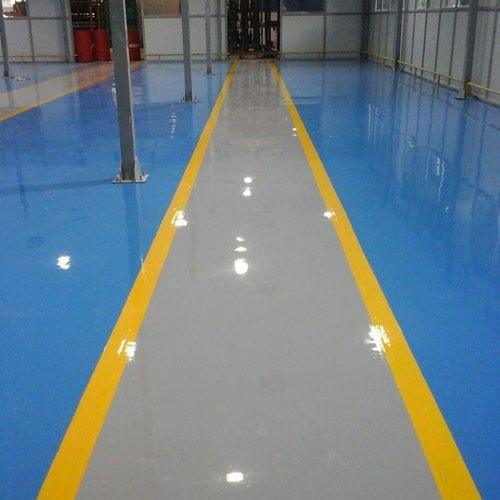
Body coats follow at controlled thickness, with anti-slip aggregate broadcast where needed and locked in by the sealer coat.
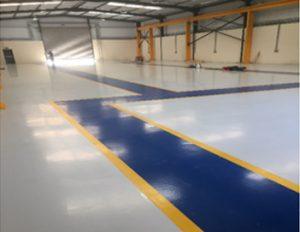
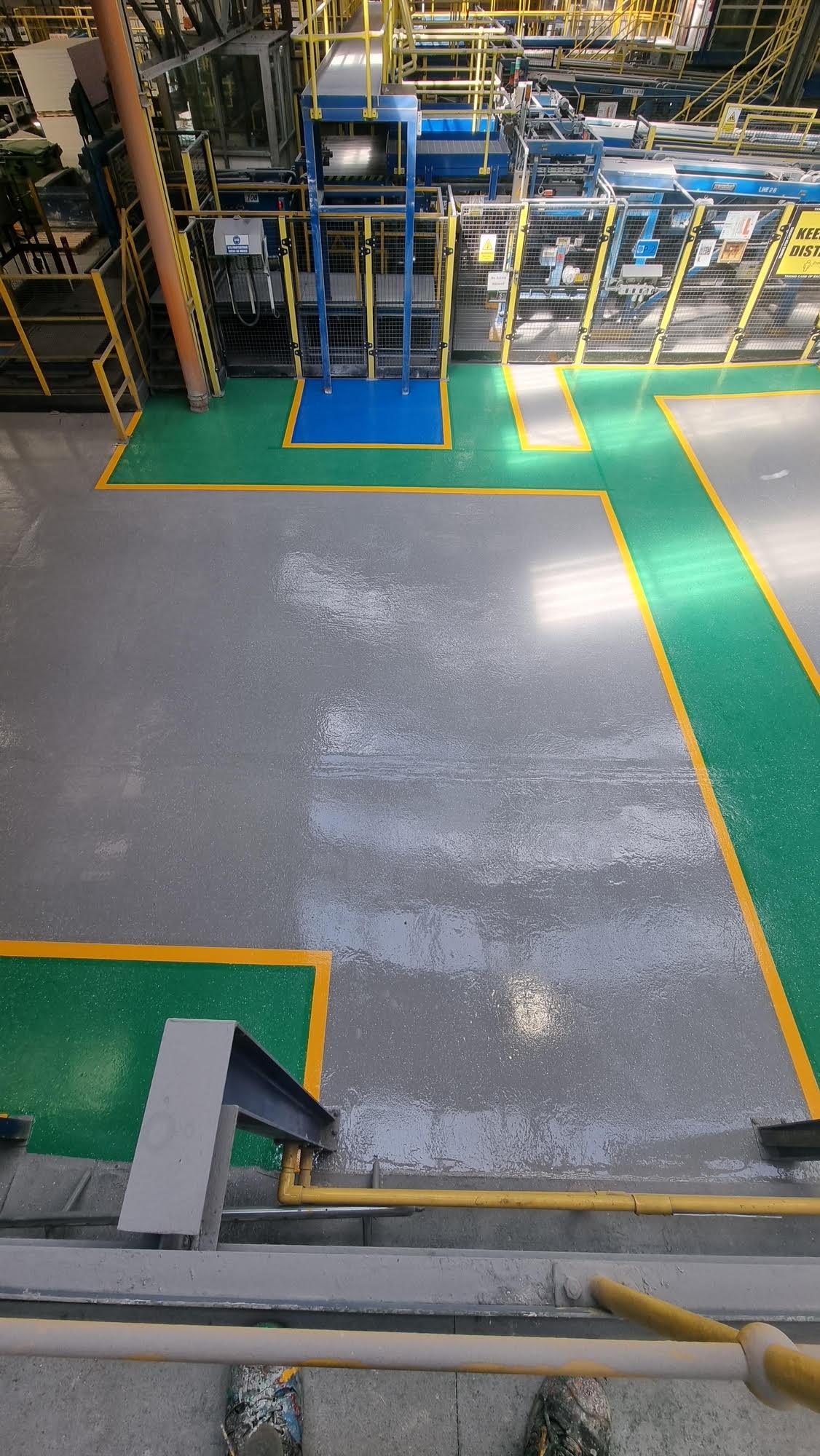
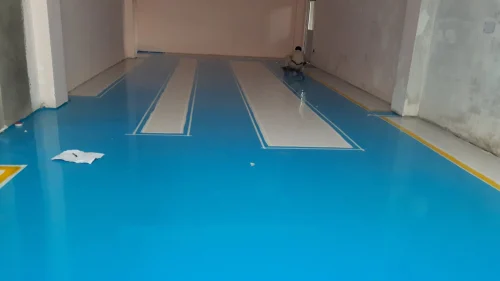
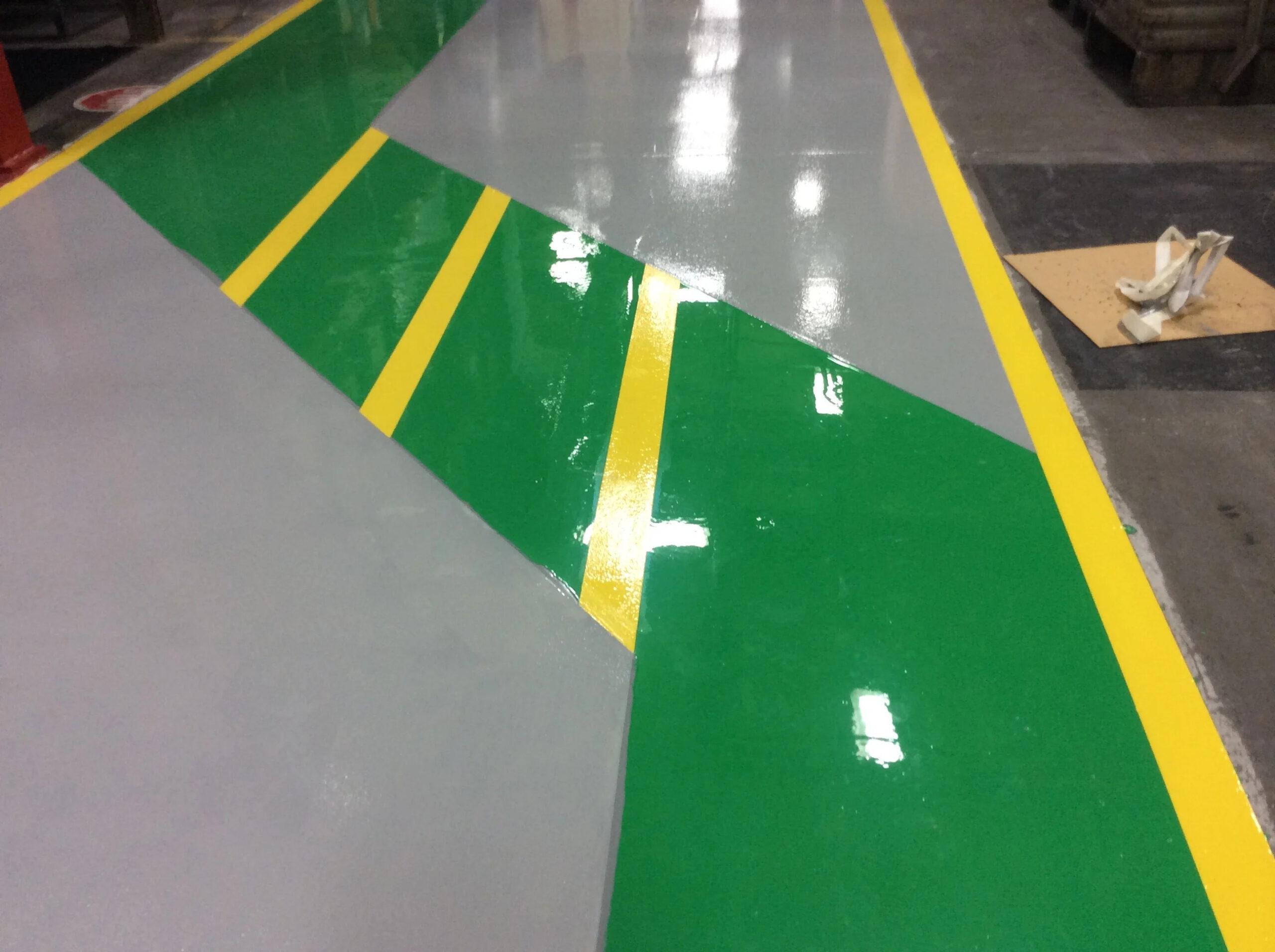
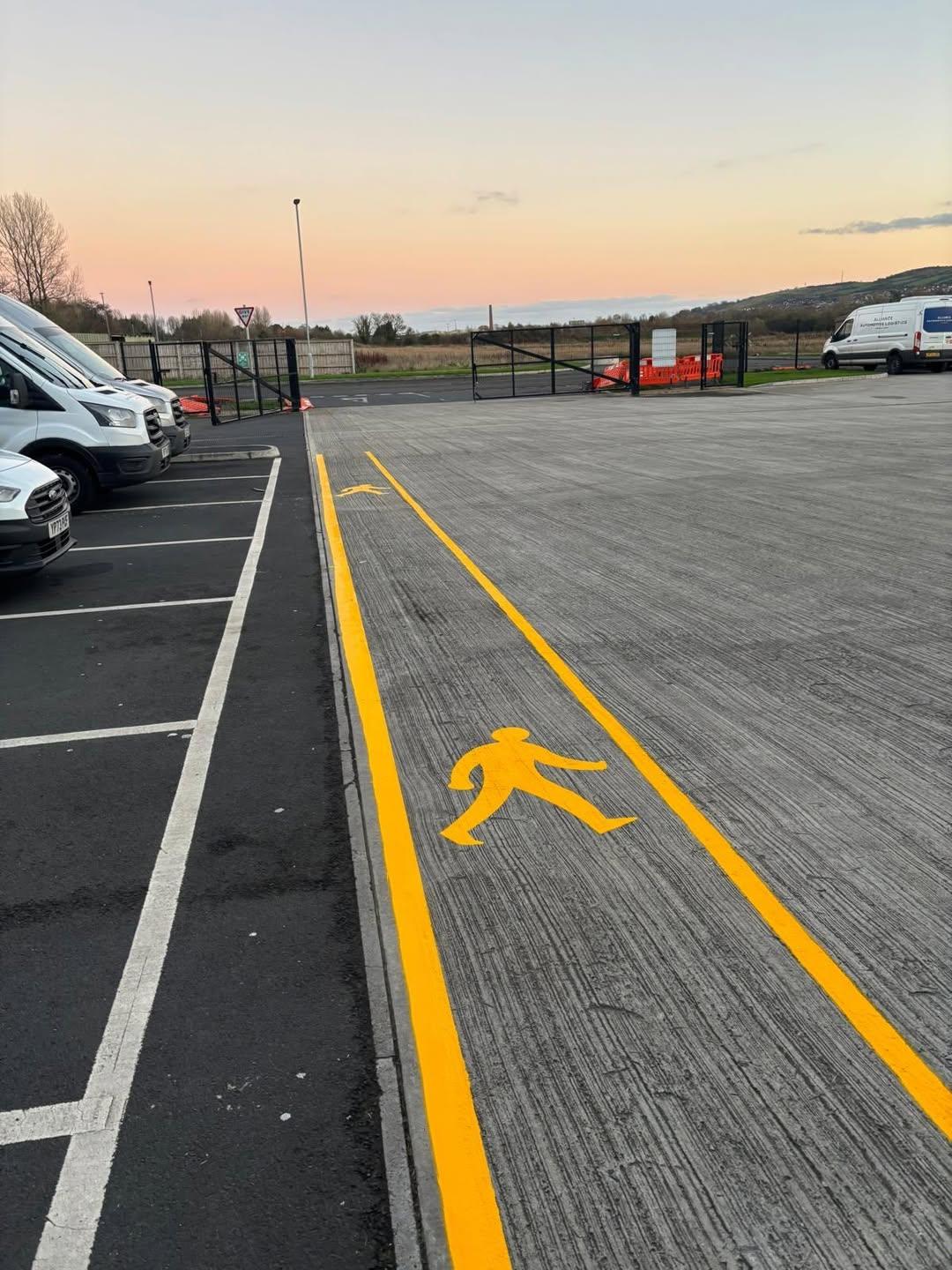
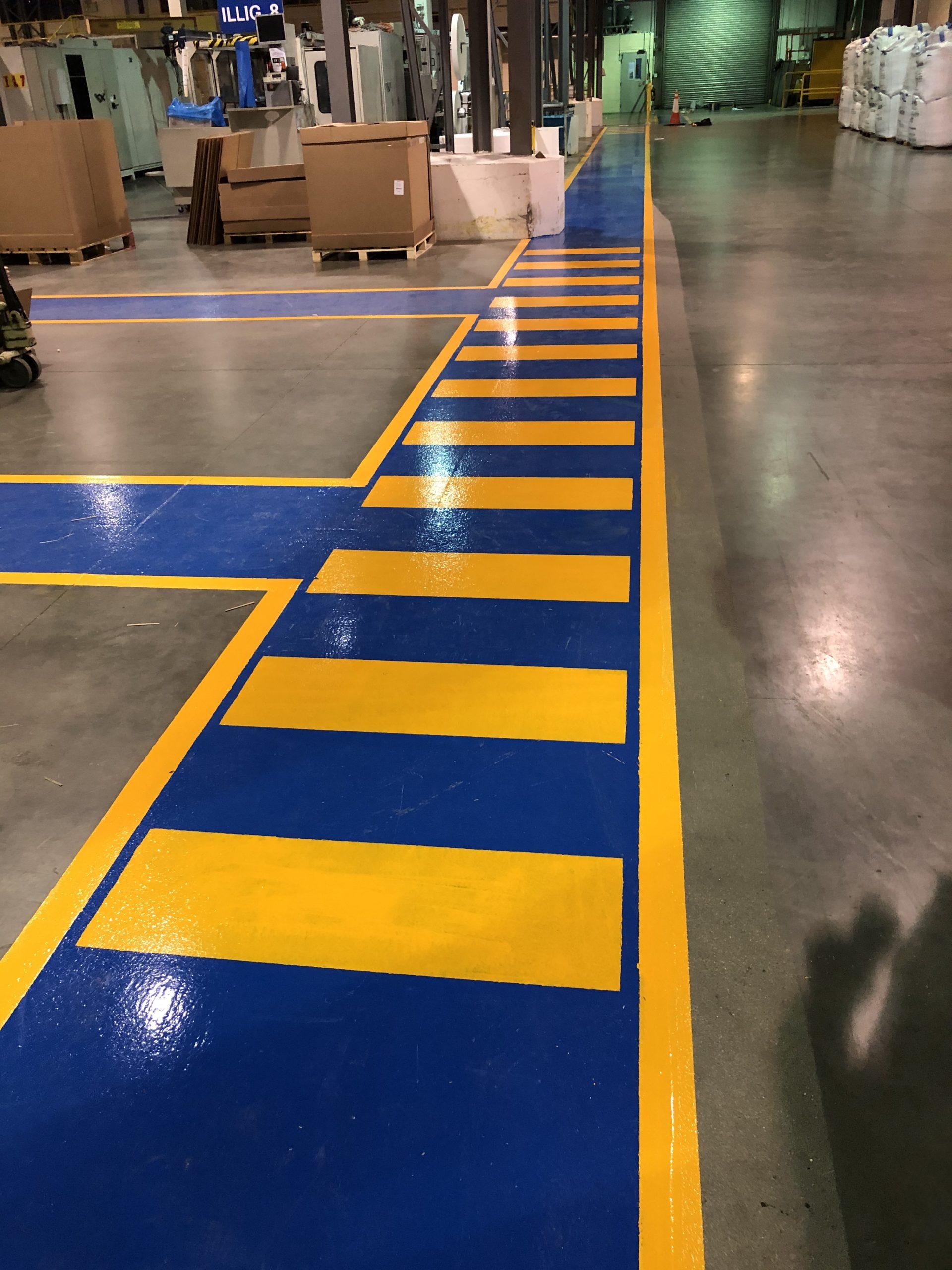
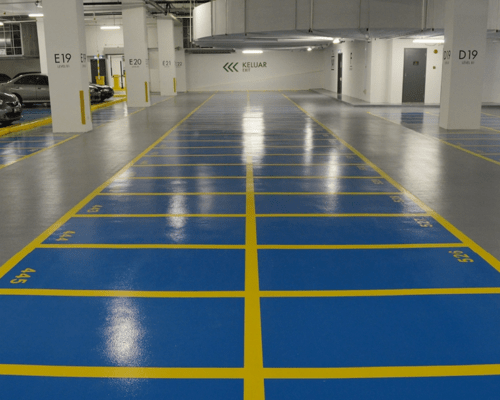
Bay edges, walkways and pedestrian routes are set out at this stage using safety line marking that bonds into the same system.
Curing and Handover
Expect touch-dry at 8–12 hours and foot traffic around 24 hours. Full chemical and mechanical service arrives at 5–7 days at 15–20°C, and cold workshops take longer.
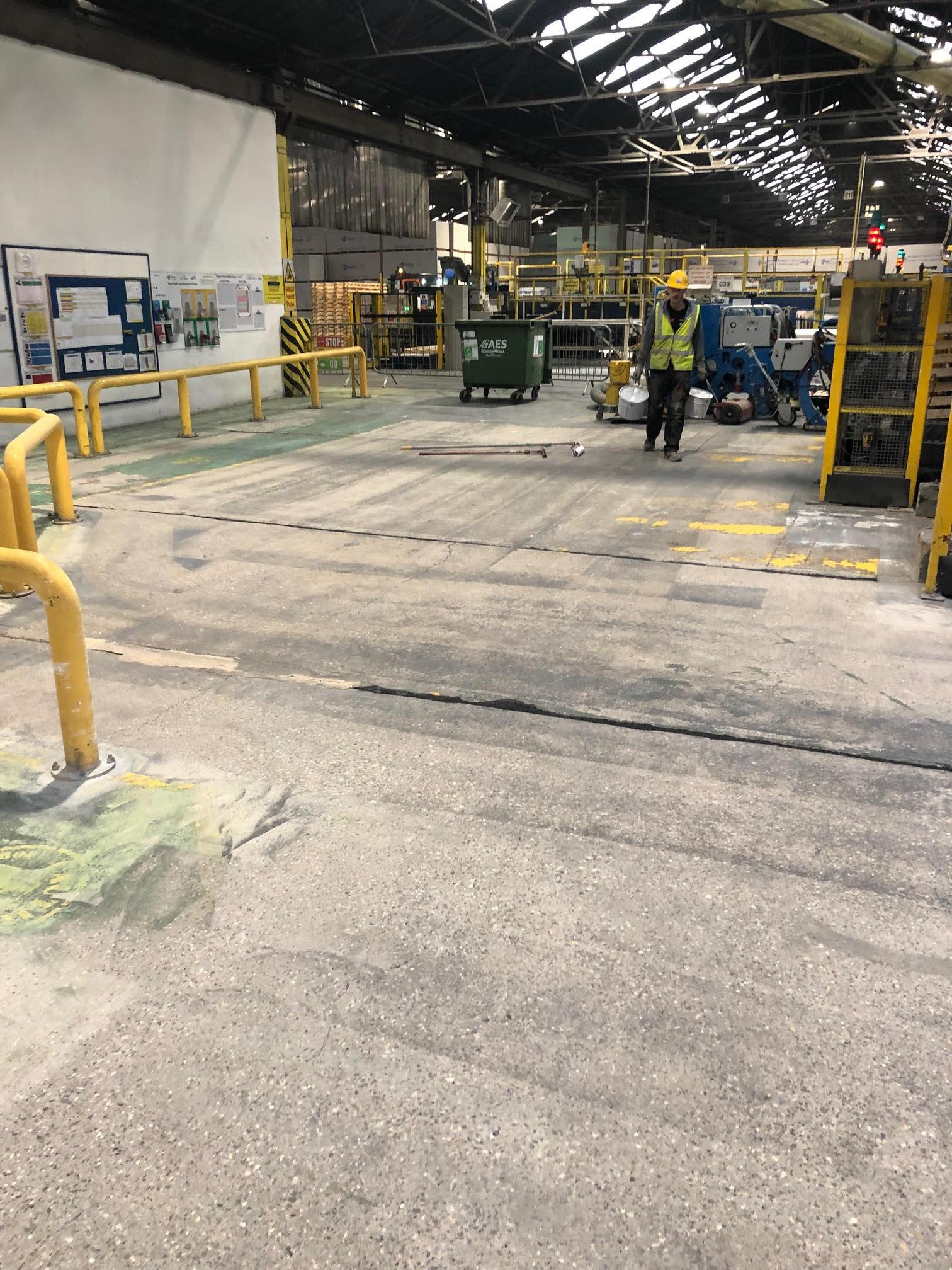
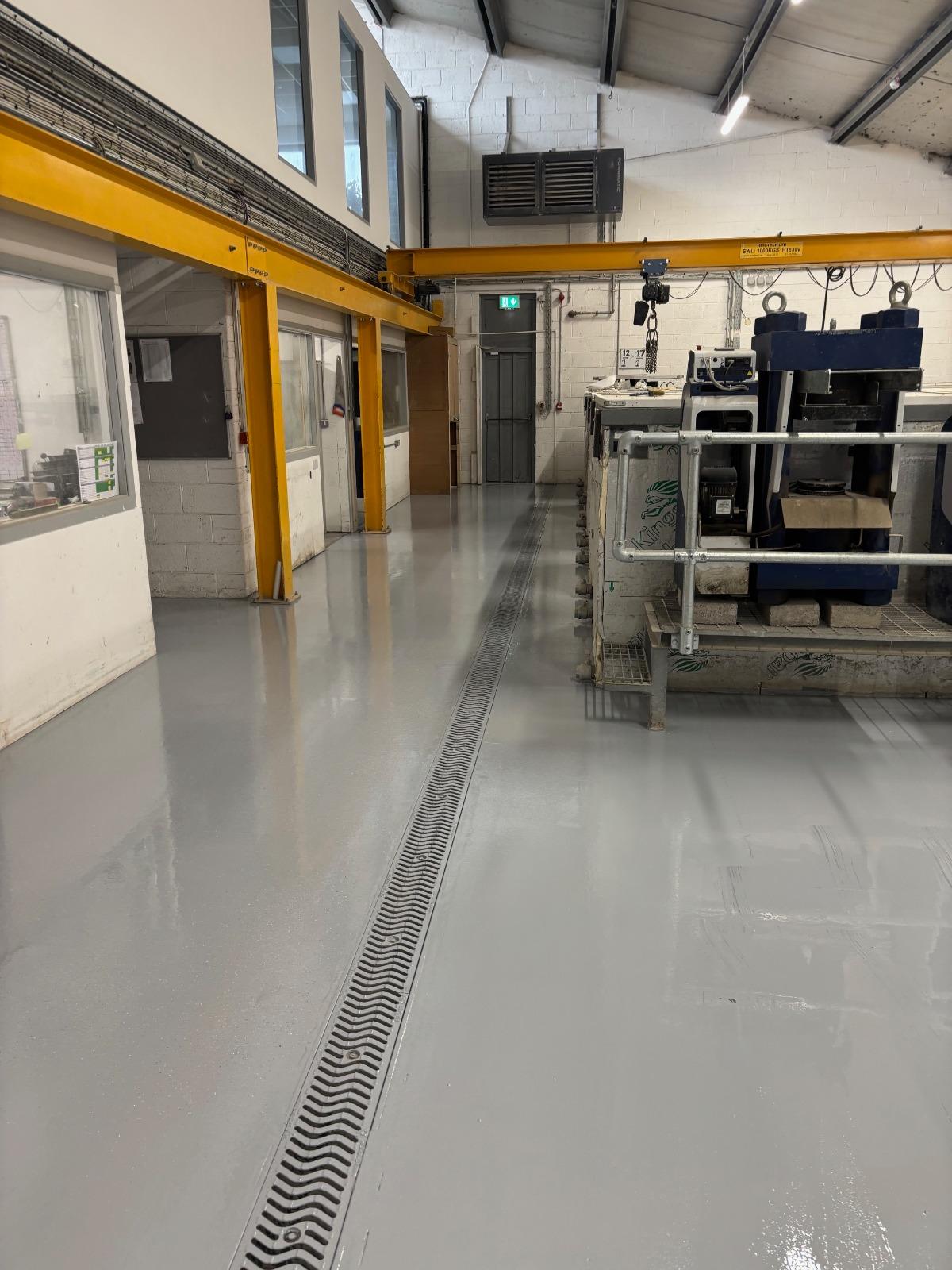
You get a clean floor, a product record and maintenance guidance that actually suits an oily environment. Our before and after gallery shows the standard we hand back.
What an Oil Resistant Floor Changes on Site
Spills Stay on the Surface
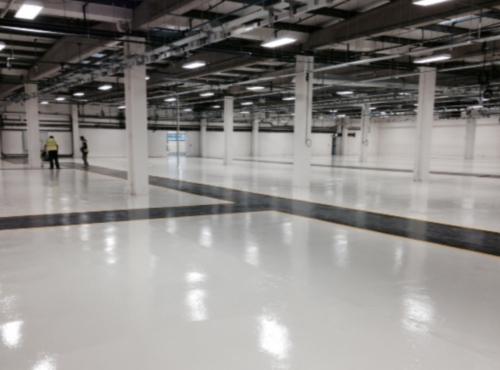
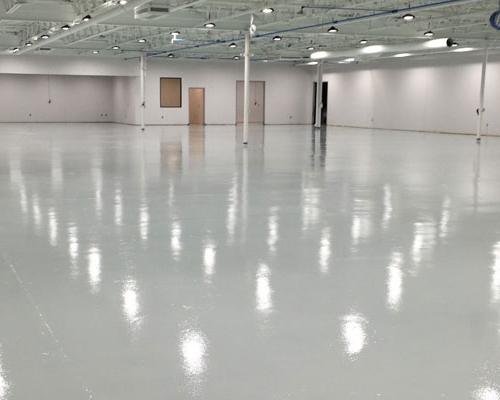
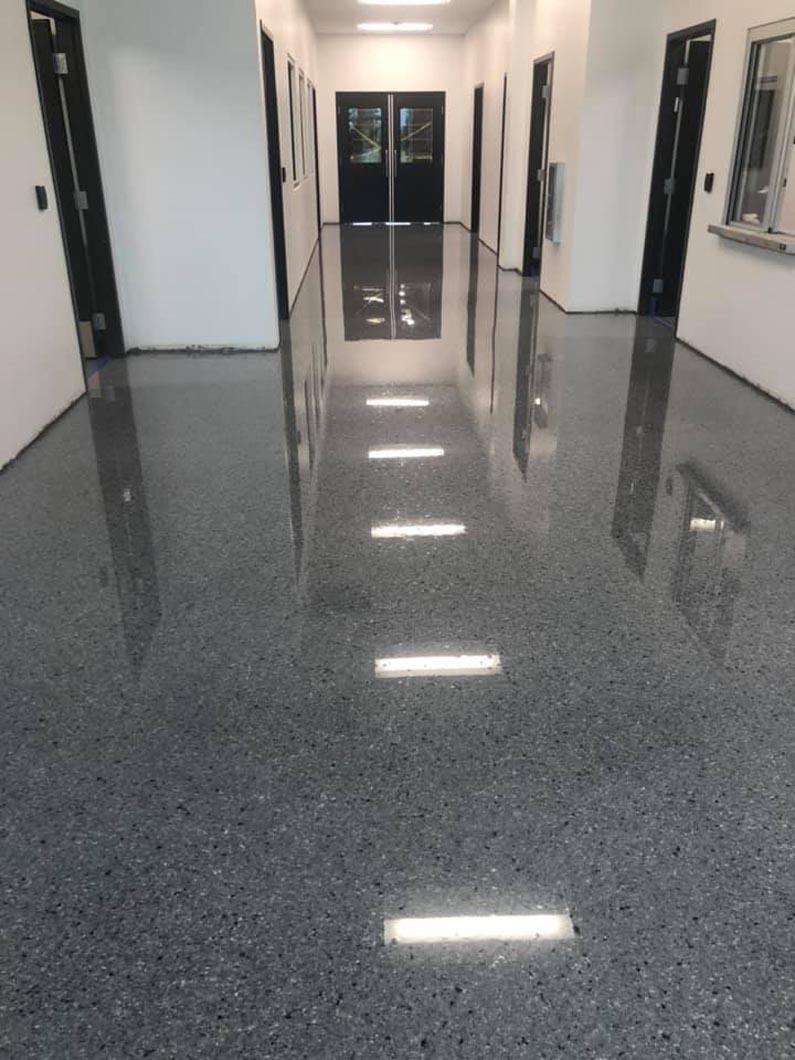
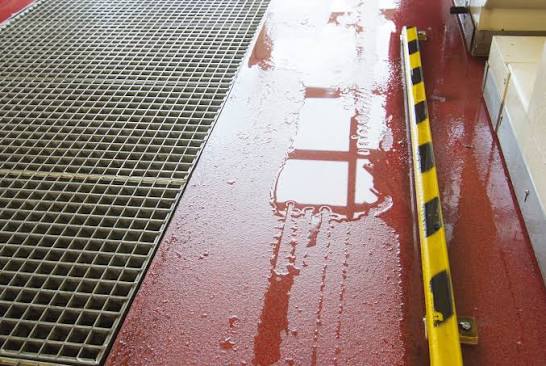
Sealed floors don’t absorb anything. Oil, coolant and diesel sit where they land until you wipe them up, so staining stops accumulating year on year.
Slip Risk Cut Sharply
Oil on smooth concrete is one of the most dangerous surfaces in any workshop. Graded anti-slip aggregate gives genuine grip, and it keeps working when the floor is wet with degreaser.
Cleaning Time Reduced
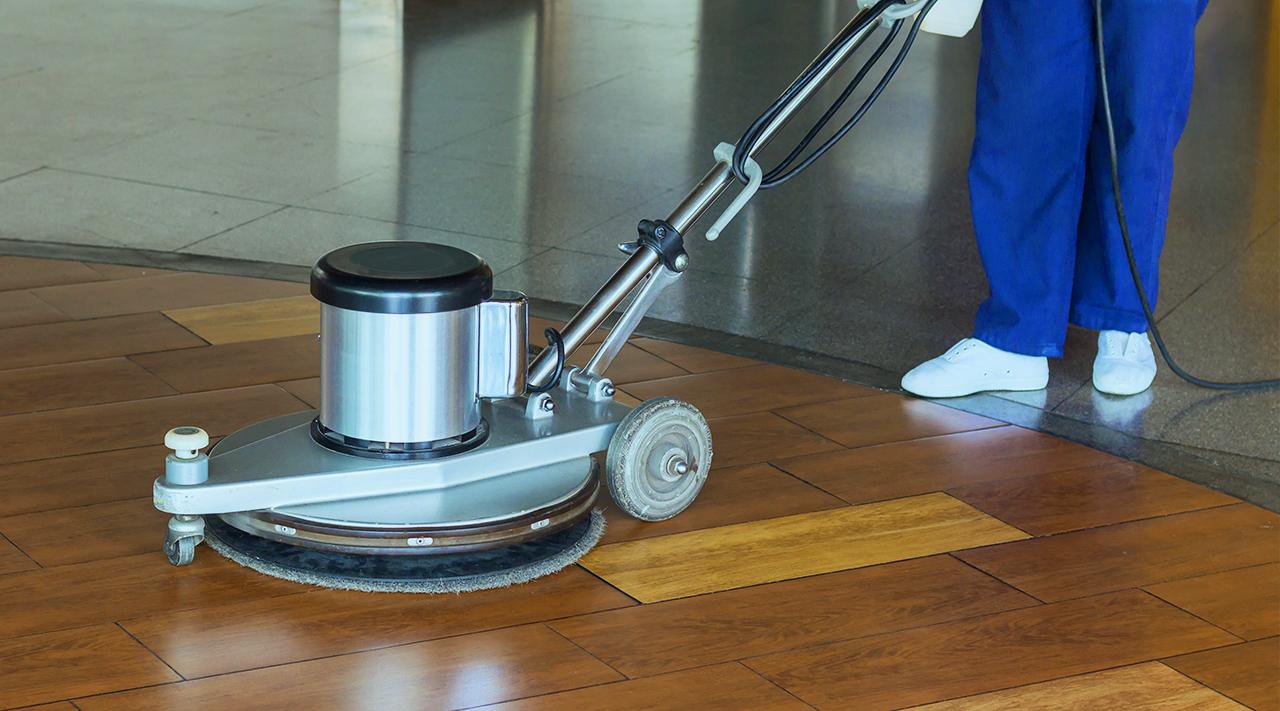
Degreasing a sealed floor takes a fraction of the effort. Scrubber-driers actually lift residue instead of pushing it around porous concrete.
The Slab Itself Protected
Oil attacks concrete over time, softening the surface and accelerating breakdown around pits and drains. A coating stops that process where it starts.
Environmental Compliance Simplified
Contained, sealed floors keep spillage out of drainage and away from groundwater. That matters for depots, fuel handling areas and any site with an environmental licence.
A Workshop That Reads as Professional
Customers, auditors and insurers all form a view quickly. A clean, marked, uniform floor changes the impression a vehicle workshop or plant room makes.
Where We Install Oil Resistant Flooring Across the Midlands
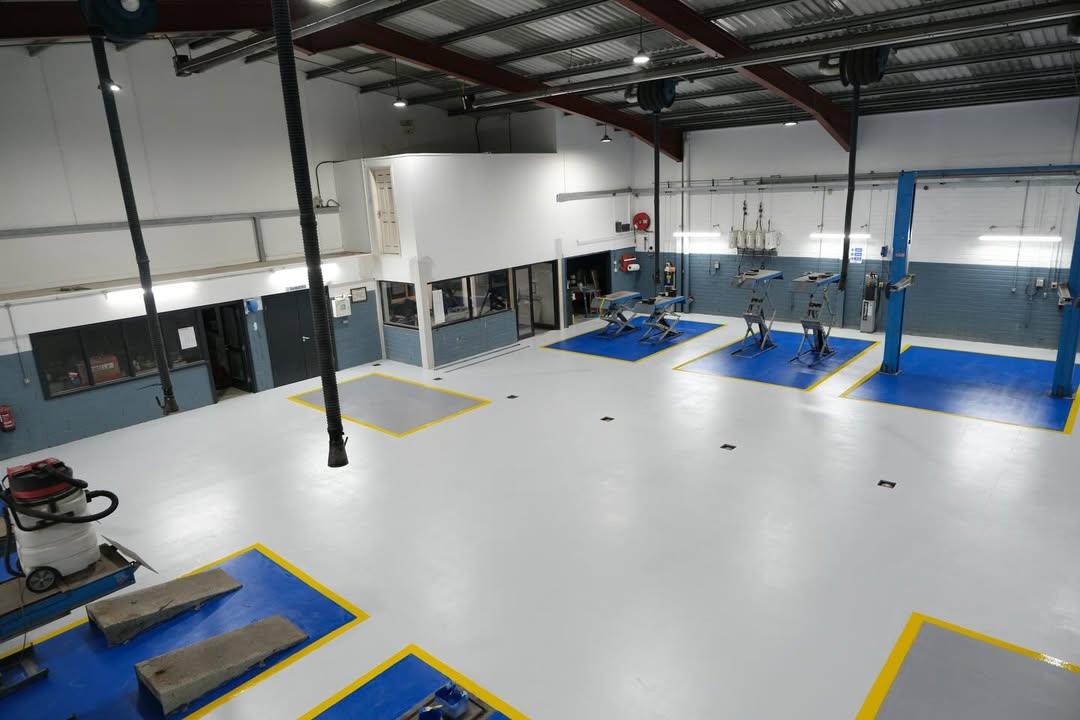
Vehicle Workshops and Service Bays
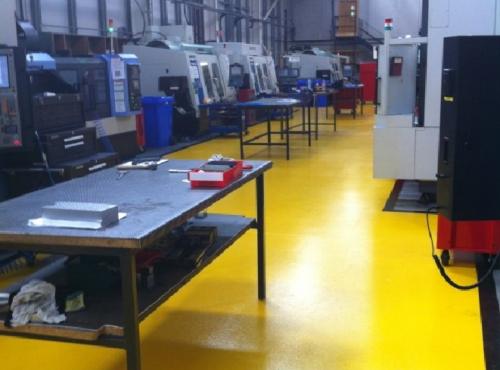
Engine oil, coolant, brake fluid and hot tyres, plus jacking loads on the same spots daily. Smaller premises often suit our garage floor painting systems, while busy commercial workshops need the heavier build described here.
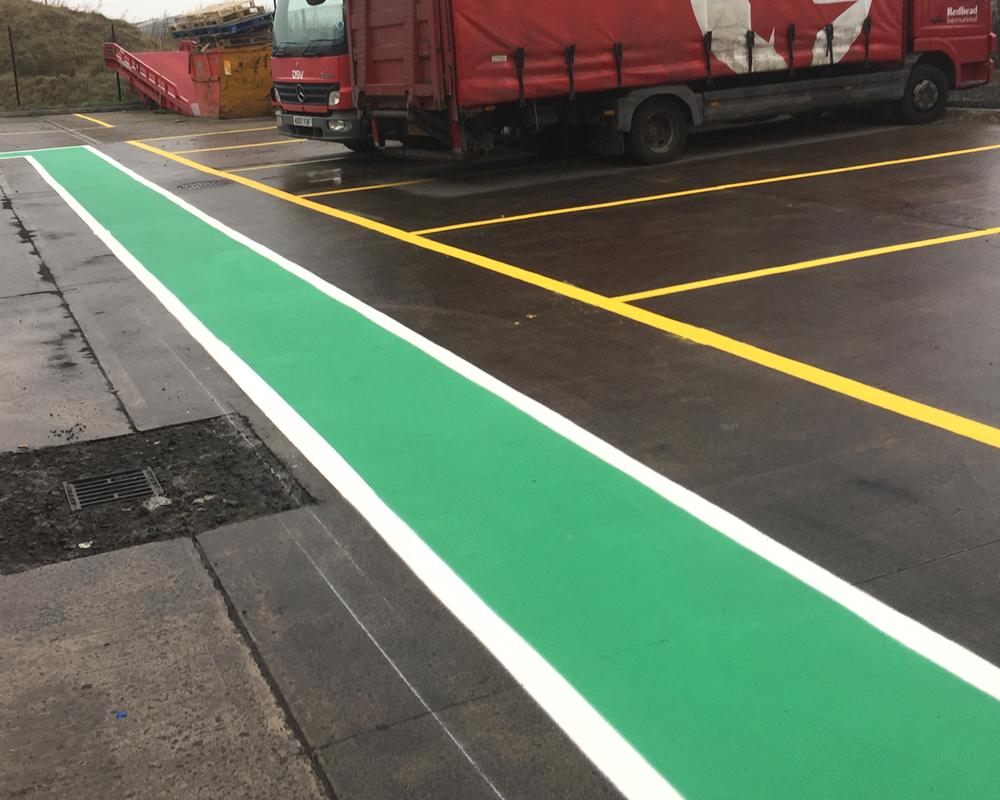
HGV and Fleet Depots
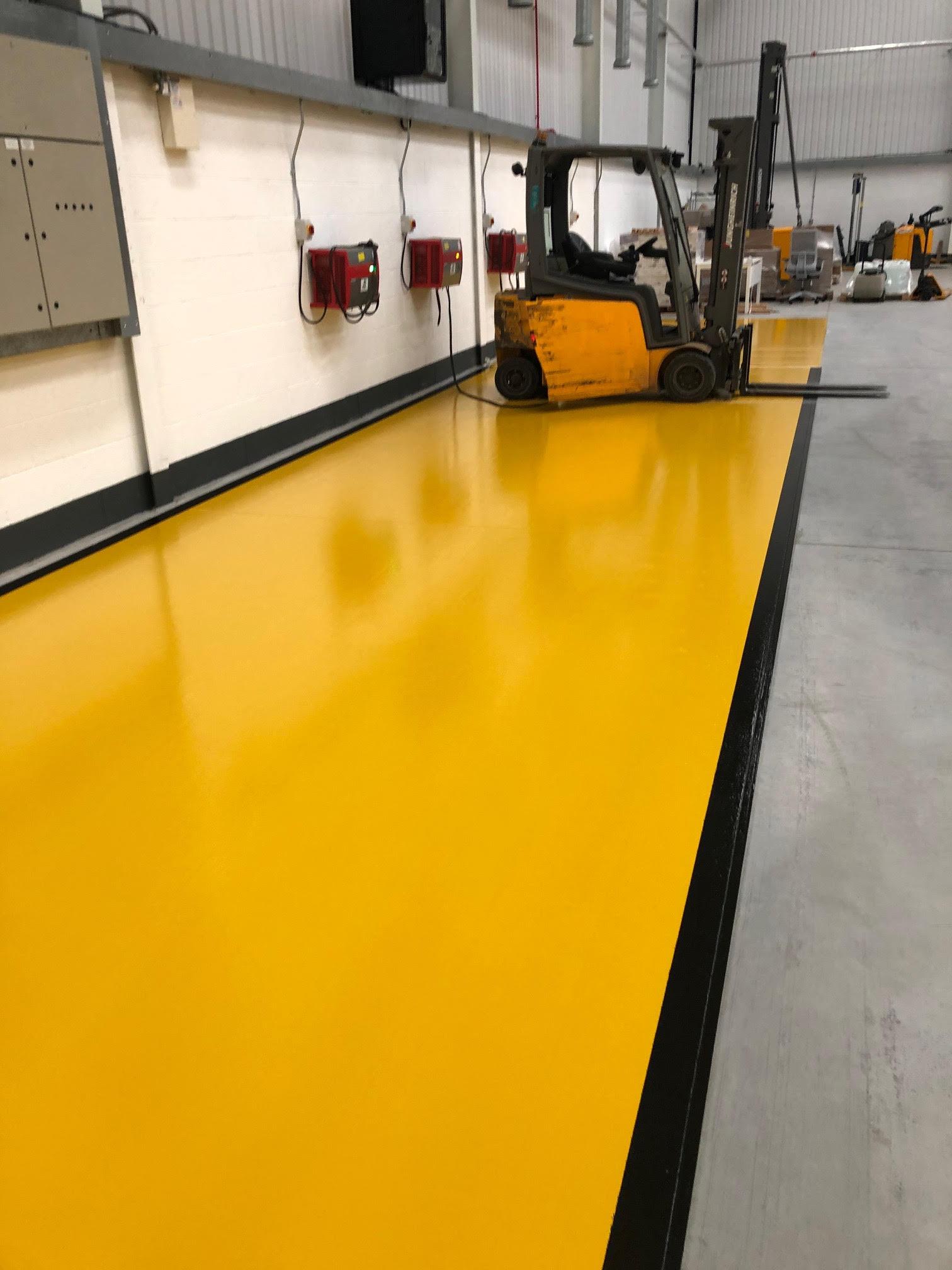
Diesel, hydraulic fluid and heavy axle loads across large floor areas. These generally combine oil resistance with a full industrial flooring build-up.
Plant Rooms and Compressor Houses
Constant minor leakage from machinery bases and pipework. Coved bunding around plant is usually part of the specification.
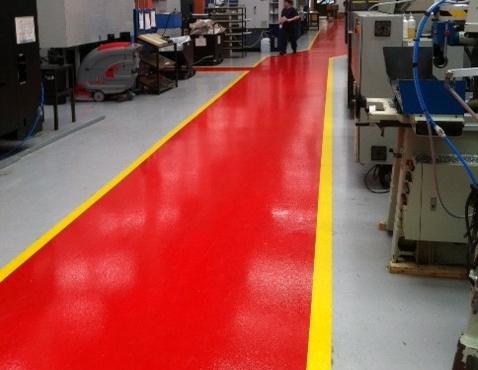
Manufacturing and Engineering Halls
Coolant, cutting oil and swarf around machine bases. Larger sites often pair this with industrial floor painting through storage and dispatch areas.
Fuel Stations, Forecourts and Bulk Storage
Diesel and petrol exposure with strict containment requirements. Sealed, contained surfaces are a licensing matter here, not just a maintenance one.
Agricultural Machinery Sheds
Tractor diesel, hydraulic oil and fertiliser together. Midlands farms punish floors harder than most industrial sites, and the coating needs to reflect that.
Bus, Rail and Municipal Depots
Round-the-clock operation, so phasing matters as much as specification. We work overnight and by section to keep vehicles moving.
We install oil resistant flooring in the Midlands across Athlone, Mullingar, Tullamore, Portlaoise, Longford Town, Birr and Roscommon Town, with full Dublin and nationwide coverage from our Dublin 3 base.
Why Choose Midland Floor Painting Company
- Ron tests contamination depth before quoting. Guessing at penetration is how contractors lose money and clients lose floors. We measure it instead.
- We apply a test panel on badly contaminated slabs. One day of checking beats a full floor bleeding through a fortnight later.
- Preparation reaches sound concrete. We remove contaminated material rather than coating over it, even when that means more work than the cheap quote allowed for.
- Honest specification, even when it costs us. If your floor only needs concrete sealing and targeted repairs, we’ll recommend that instead of a full resin system.
- Pits, drains and falls addressed properly. Oil concentrates in exactly these places, so we detail them rather than working around them.
- Disruption planned in writing beforehand. Night shifts, weekends and bay-by-bay phasing are routine, and you’ll know which areas close when.
- Free written, itemised quotes. Decontamination, repairs, primer and coats appear as separate lines so you can compare quotes properly.
- Decades of hands-on experience. Contaminated industrial floors are core work for us, backed by 5-star Google reviews and years of repeat clients. Read more about Ron and the crew.
Related Services
Oil-affected floors usually need more than a coating. Heavily saturated slabs generally start with floor grinding or full removal through our floor coating removal service. Where solvents or acids are handled alongside oil, chemical resistant flooring is the stronger specification, and static-sensitive areas may also need anti-static flooring. Dusty adjoining stores are handled economically with dust proofing, while vehicle routes and parking areas suit car park flooring. If you’re unsure how deep the contamination runs, book a floor inspection and repair visit first.
Get Your Free Oil Resistant Flooring Quote Today
An oil-soaked floor gets worse quietly. The contamination goes deeper, the slab softens around the pits, and the preparation cost climbs every year you leave it. Meanwhile the surface stays slippery, the staining spreads, and one bad step near the wash bay turns a maintenance issue into an insurance claim. Coating it now costs less than coating it later, and considerably less than replacing the slab.
Oil resistant flooring in the Midlands, delivered by Ron and the crew, starts with testing how bad the contamination really is. The survey is free. The quote is written and itemised. We work around your bays so the workshop keeps earning.
Call Ron: 086 2631652 — direct line, straight answers
Call Office: 014800555 — Sun–Fri, 09:30–17:30
Email: info@midlandsfloorpaintingco.ie
Or send your details through our contact page and we’ll come back to you the same working day, with no obligation.
Strip it back properly once. Wipe up spills for the next ten years.