

Diamond Grinding in the Midlands for Floors That Need Cutting, Not Just Cleaning
Diamond grinding in the Midlands is what you call for when a floor has a geometry problem rather than a surface problem. There’s a real difference. A slab with weak laitance needs light preparation. A slab where joint lips have risen 4mm, where power-float burnish has sealed the surface glass-hard, or where a warehouse has been re-racked into narrow aisles that now demand a flatness the original pour never delivered — that’s a cutting job. It needs planetary heads, aggressive metal-bond segments and someone who can read how much concrete can safely come off before the reinforcement gets uncomfortably close.
Get it wrong in either direction and it’s expensive. Cut too little and the lip is still there, still hammering wheels. Cut too much and you’ve thinned a structural slab or exposed aggregate the client never wanted to see. Ron surveys with a straight edge and a scratch test before quoting, works out how much material has to move, and tells you plainly what’s achievable. Warehouses, cold stores and production floors across Westmeath, Offaly and Dublin have been corrected by our crew without a single day of lost operation, which is why several clients keep calling us back — as our customer testimonials reflect.
Got lips, humps or a floor that’s gone glass-hard? Call Ron on 086 2631652 for a free survey.
The Problems Diamond Grinding Actually Solves
This is heavier work than routine preparation, so it’s worth knowing when it’s genuinely warranted.
- Joint lips and slab curling. Concrete curls upward at the edges as it dries, leaving one bay standing proud of the next. Forklift wheels then hammer that step thousands of times a day. Grinding the lip flat stops the impact damage at source.
- Trip hazards and uneven surfaces. A 5mm step in a public area is a genuine liability. Grinding removes it in an afternoon without breaking out concrete.
- Flatness for narrow aisle racking. VNA trucks operating at height are extremely sensitive to floor deviation. A slab that was fine for counterbalance trucks can be unusable for VNA, and grinding to a tighter tolerance is far cheaper than repouring.
- Power-float burnish. Heavily trowelled slabs are dense, closed and almost impermeable. Densifiers won’t penetrate and coatings struggle to bond. Aggressive diamond cutting opens them properly.
- Aggregate exposure. Where the design calls for a salt-and-pepper or full-aggregate look, controlled grinding depth determines the result. This is the first stage of concrete floor polishing.
- Levelling repairs and screed overpours. Patches, stitched cracks and screed lines all need cutting flush so nothing catches a wheel or a pallet edge.
Where the requirement is simply removing laitance ahead of a coating, standard floor grinding is lighter and cheaper. We’ll point you there when that’s all you need.
Tooling, Machines and Cutting Depth
The technical decisions here determine both the result and the price, so it’s worth understanding them.
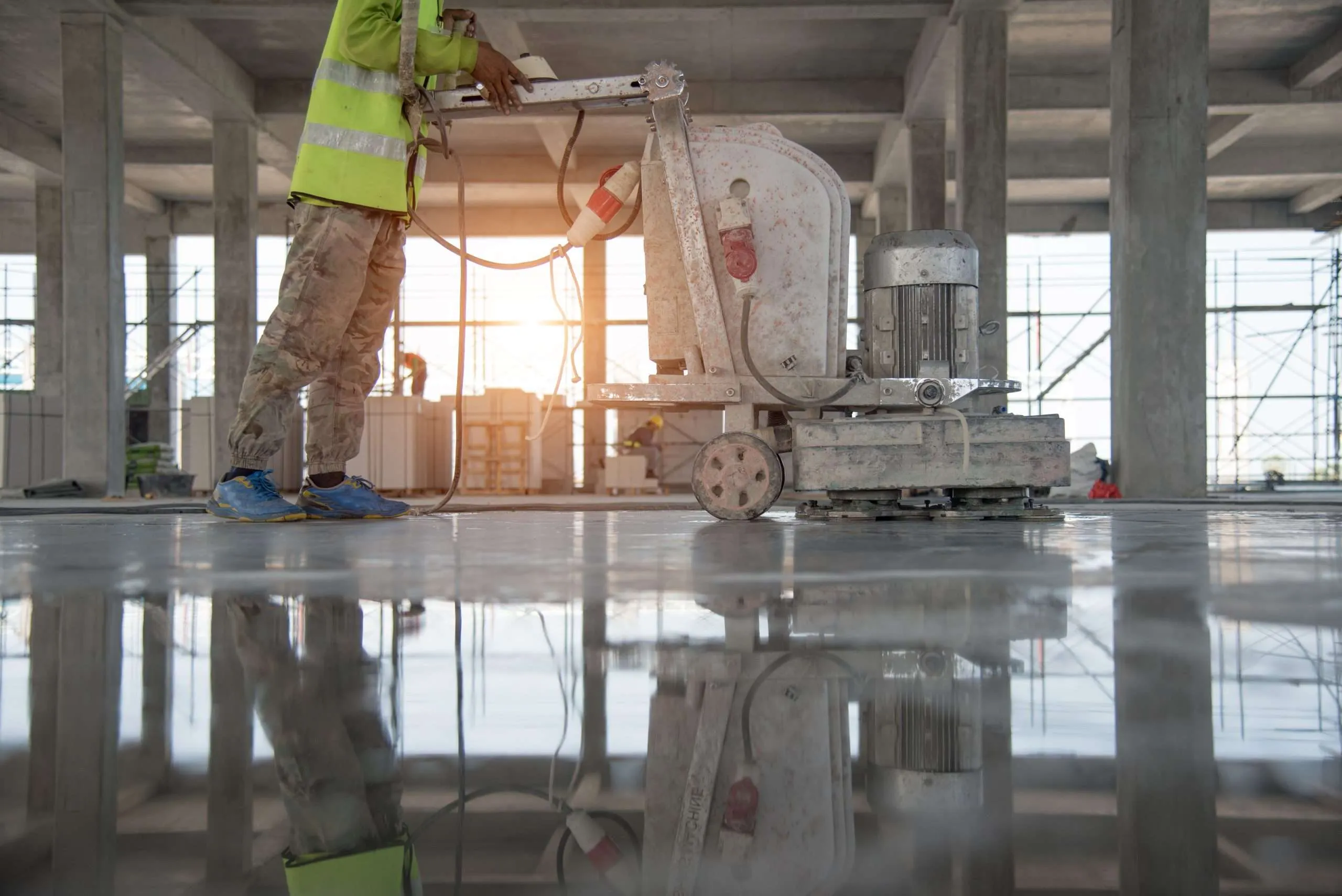
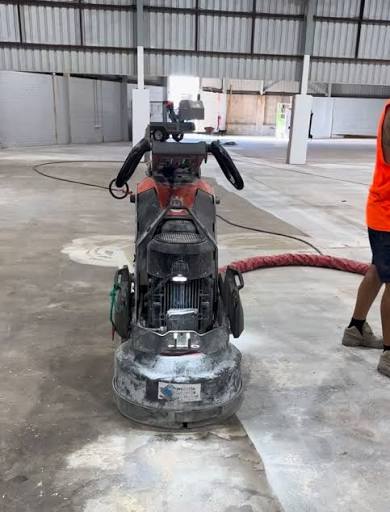
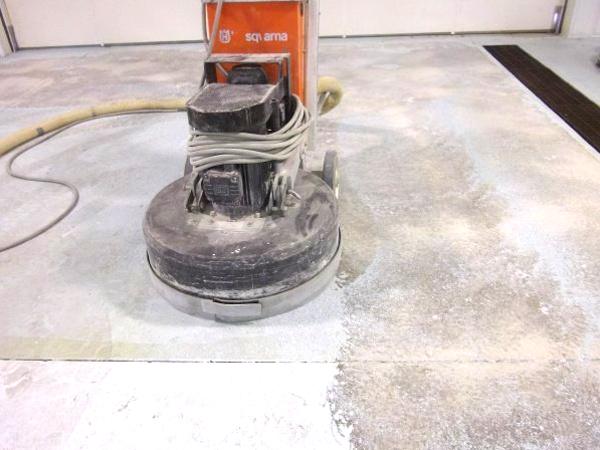
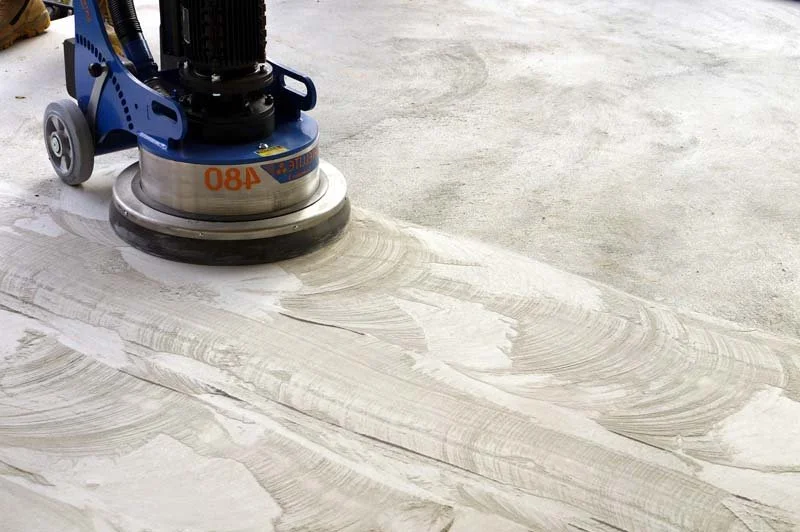
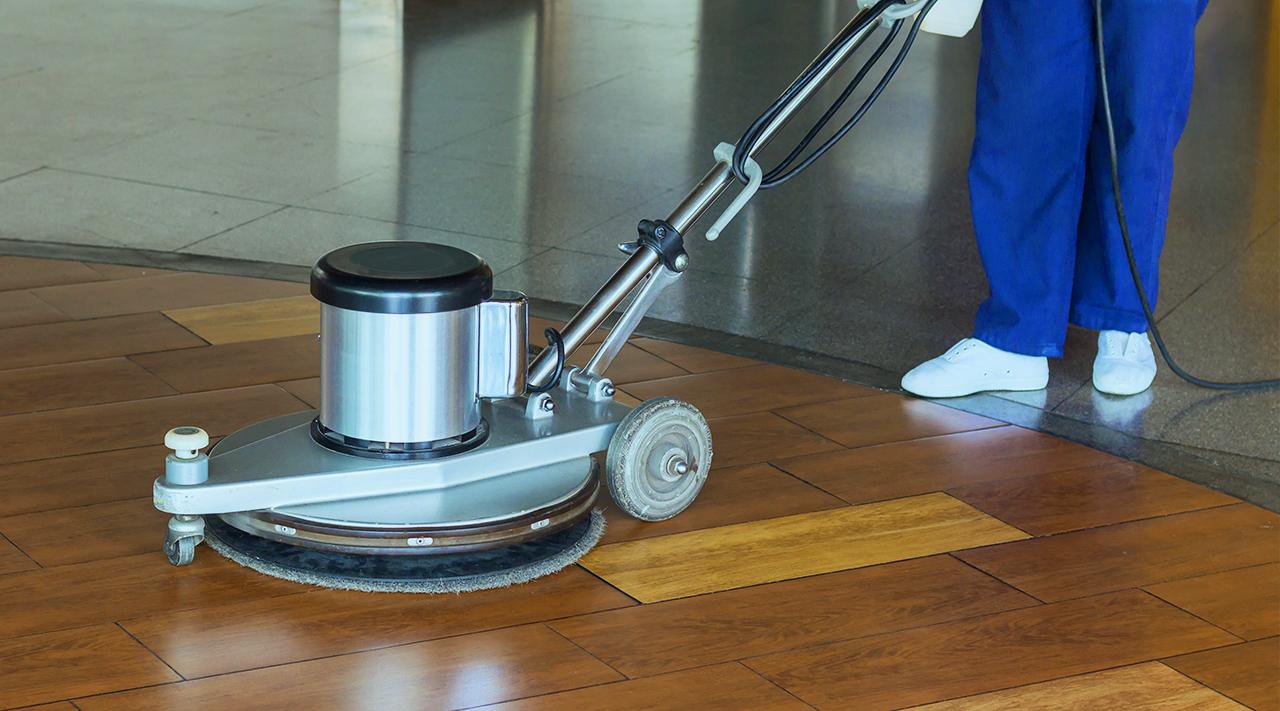
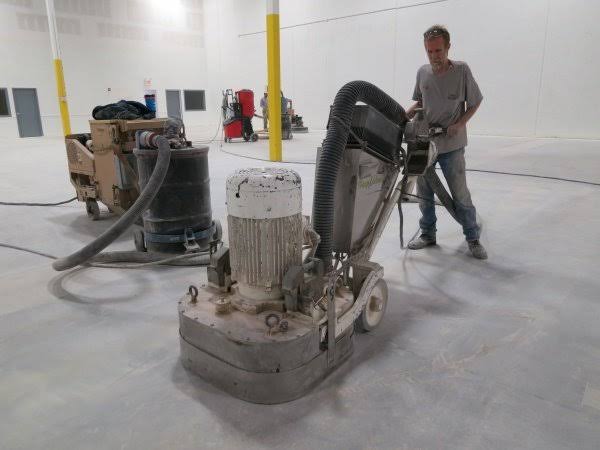
- Planetary grinders. Multiple counter-rotating heads on a rotating plate. The counter-rotation cancels out directional bias, which is what produces a genuinely flat surface rather than a wavy one. These are the machines for flatness work.
- Metal-bond diamond segments. Diamond crystals held in a metal matrix. The matrix wears away at a controlled rate to keep exposing fresh diamond, which is why bond selection against slab hardness matters so much.
- Grit progression. Heavy cutting starts around 16–30 grit. Refining runs through 60–120. Polishing continues far finer, though for coating preparation we deliberately stop coarse — a smooth surface bonds worse.
- Bond hardness matched to concrete. Soft bonds for hard slabs, hard bonds for soft slabs. Get this backwards and you either burn through tooling at enormous cost or glaze the segments so they stop cutting altogether.
- Realistic cutting depth. We generally remove up to 3–5mm across an area, and more locally on lips and high spots. Beyond that, cover to reinforcement becomes the limiting factor and a screed overlay is the safer answer.
- Edge and corner tooling. Hand-held grinders reach where planetary machines physically cannot. Skipping this leaves an untreated perimeter strip, which is exactly where problems reappear.
How We Carry Out Diamond Grinding in the Midlands
Precision work needs a plan before the machines come off the van.
Free Survey and Levels Assessment
Ron surveys the floor with a straight edge and, where flatness tolerances matter, takes level readings across a grid. He scratch-tests hardness and identifies where lips, humps and worn channels actually sit.
That survey tells us how much material has to come off and where. Without it, nobody can price the job accurately, and floors quoted by eye tend to develop expensive surprises halfway through.
You get a written, itemised quote covering cutting, edge work, repairs and reinstatement separately.
Marking Out and Checking Cover
High spots and lips are marked on the floor so operators cut exactly where needed rather than across the whole area.
We also check slab thickness and any services below. Cutting into buried conduit or heating pipework turns a straightforward programme into a serious problem.
Heavy Cutting Passes
Aggressive segments take the bulk of the material first, working in overlapping runs with direction changed between passes so no tramlines develop.
Lips and localised high spots are ground down and feathered into the surrounding floor, so there’s no visible step where the correction ends.
Progress is checked constantly with a straight edge. On flatness jobs we re-survey as we go, because grinding to a tolerance is an iterative process rather than a single pass.
Refining Passes
Finer grits follow to remove the scoring left by heavy cutting. How far we take this depends entirely on what’s going on top.
For coatings, we stop at a coarse profile. And for polished finishes, we continue through progressive grits. But for bare floors that simply needed levelling, a mid-range finish usually looks and performs best.
Edges, Corners and Obstacles
Perimeters, column bases and areas around fixed plant are hand-ground to match. It’s slower and it matters, because an untouched border undermines everything else.
Dust Extraction Throughout
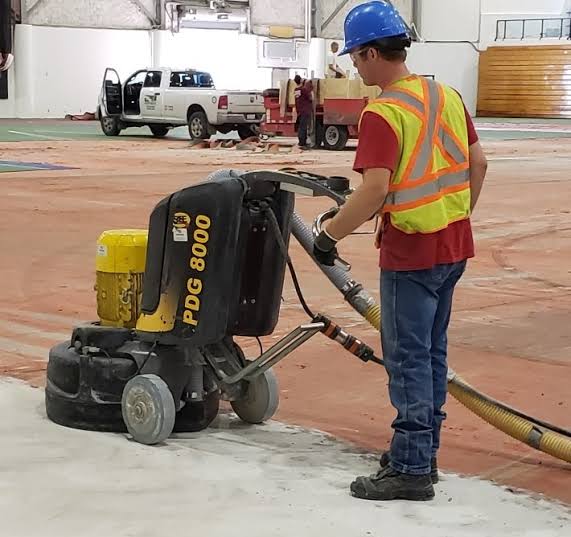
Every machine runs into H-class vacuum extraction with HEPA filtration. Concrete dust carries respirable crystalline silica, so this is a health control first and a housekeeping benefit second.
It’s also what allows us to work in occupied buildings, alongside live production and in food or pharma environments without contaminating adjacent areas.
Repairs Exposed and Addressed
Deep cutting reveals what the surface was hiding. Hollow patches, cracks and weak concrete become visible.
Cracks are dealt with through floor stitching, while spalled areas and potholes go through concrete floor repairs. Perished joints are reinstated with mastic floor joint repairs so the new surface isn’t undermined at the joint line.
Final Clean and Handover
The floor is vacuumed and inspected across its full area for consistency. Where flatness was the objective, we re-check levels and provide the readings.
Bare ground floors take traffic immediately. Where a coating follows, we prime promptly, because an open profile collects contamination fast. Our before and after gallery shows completed work.
What Diamond Grinding Delivers?
Wheel Impact Eliminated
Every joint lip is a small hammer blow repeated thousands of times daily. Removing it protects the slab, the truck and the load simultaneously.
Racking and Handling Equipment Protected
Uneven floors cause mast deflection, load instability and accelerated wear on wheels, bearings and mast bearings. Flatness correction pays back through the maintenance budget.
Slab Replacement Avoided
Grinding a floor flat costs a fraction of breaking out and repouring. For most Midlands warehouses, that comparison ends the discussion.
Trip Hazards Removed Quickly
A liability that has been sitting on the risk register for months disappears in a day, with no concrete work and no lengthy closure.
Dense Slabs Made Workable
Power-floated concrete that rejected a densifier or a coating becomes receptive once the burnish is cut off. That reopens options previously ruled out.
A Genuine Aesthetic Option
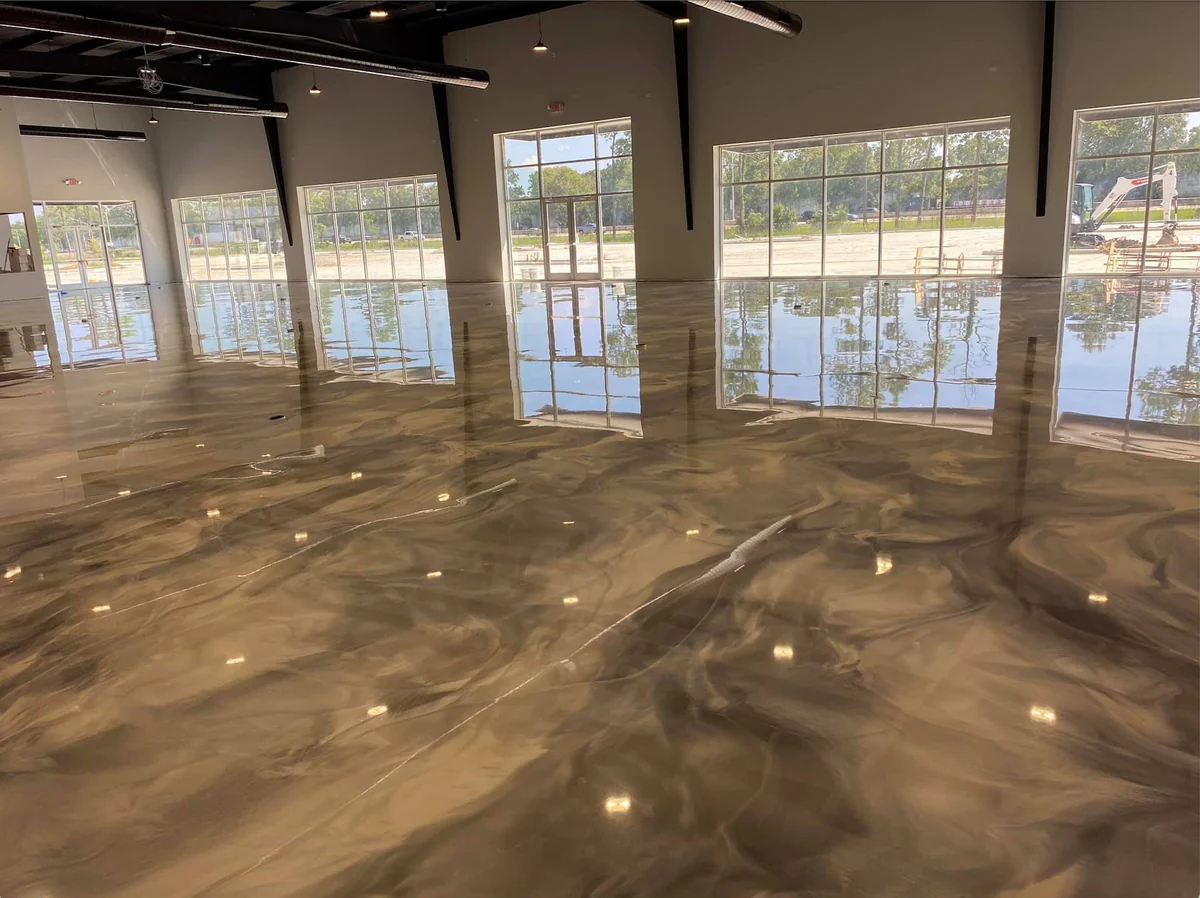
Controlled exposure of aggregate turns a functional slab into a finished surface. Combined with dust proofing or polishing, it’s a low-maintenance floor with no coating to fail.
The Right Base for Anything Above
Coatings, screeds, PVC flooring and resin systems all perform better on a flat, properly profiled slab.
Where We Carry Out Diamond Grinding Across the Midlands?
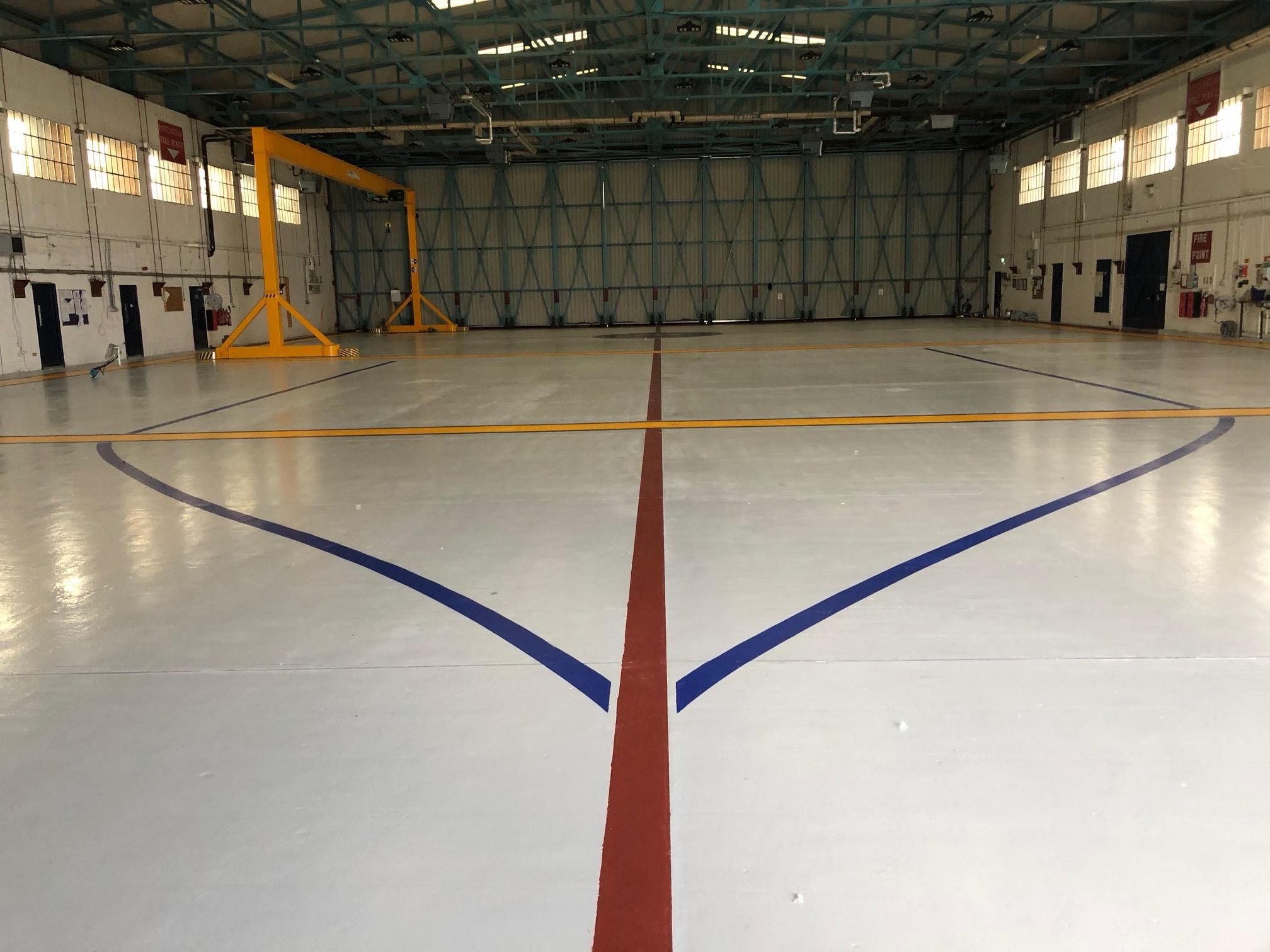
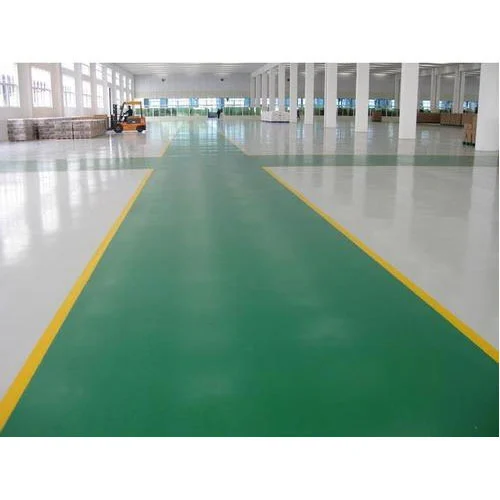
Warehousing and Distribution Centres
Joint lip correction and aisle flatness are the bread and butter here. Frequently done ahead of a full industrial flooring build-up, or on its own where the slab is otherwise sound.
Narrow Aisle and High-Bay Storage
Tighter tolerances than standard warehousing, with grinding surveyed and verified against defined flatness criteria.
Cold Stores and Chilled Facilities
Thermal movement drives curling, so lips develop faster in these buildings. Grinding is often the only viable correction without shutting the store down.
Manufacturing and Engineering Halls
Levelling around machine bases and removing worn channels where traffic has cut grooves into the surface over years.
Food and Pharmaceutical Plants
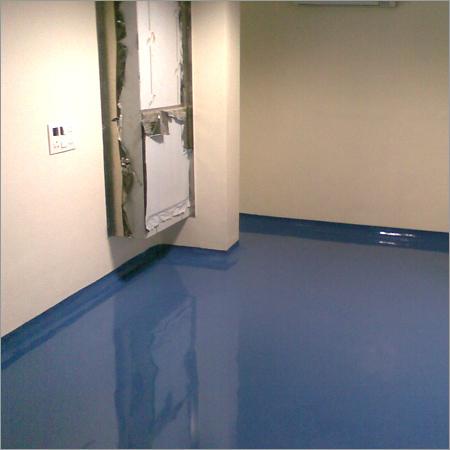
Preparation for hygiene floor coating and clean room systems, carried out with extraction that suits controlled environments.
Retail, Education and Public Buildings
Trip hazard removal and adhesive residue cutting between fit-outs. Out-of-hours working keeps these spaces open.
Car Parks and Structural Decks
Levelling ramps and thresholds ahead of car park flooring, plus removal of failed deck systems.
Workshops and Vehicle Bays
Cutting out oil-contaminated concrete before recoating, which links directly to our oil resistant flooring preparation.
We deliver diamond grinding in the Midlands across Athlone, Mullingar, Tullamore, Portlaoise, Longford Town, Birr and Roscommon Town, with full Dublin and nationwide coverage from our Dublin 3 base.
Why Choose Midland Floor Painting Company?
- Ron surveys levels before quoting. How much concrete has to move determines everything, and no honest price exists without measuring it first.
- We check cover before cutting deep. Slab thickness and reinforcement depth set a hard limit, and we work within it rather than discovering it the hard way.
- Tooling matched to your concrete. Bond hardness and grit are selected against a scratch test, then changed as the slab varies across the floor.
- Planetary machines for flatness work. Counter-rotating heads are what produce a genuinely flat result instead of a smooth but wavy one.
- Edges and obstacles hand-ground. Perimeters, columns and plant bases are cut to match, because a missed border undoes the rest.
- H-class extraction as standard. Silica dust is an occupational health matter, and it’s also what lets us work alongside live production.
- Free written, itemised quotes. Cutting, edge work, repairs and reinstatement appear as separate lines so you can compare properly.
- Decades of hands-on experience. Surface correction is core work for us, backed by 5-star Google reviews and years of repeat clients. Read more about Ron and the crew.
Related Services
Diamond grinding usually sits within a larger programme. Lighter preparation ahead of a coating is handled through standard floor grinding, while thick failed systems come off faster using dust free shot blasting or our epoxy floor removal service. Once the floor is flat, most clients apply epoxy flooring or a straightforward industrial floor painting finish, then define traffic routes with safety line marking. Sound slabs needing nothing more are protected economically with concrete sealing. If you’re not sure whether your floor needs grinding, screeding or repair, book a floor inspection and repair visit first.
Get Your Free Diamond Grinding Quote Today
An uneven floor charges you every single day, and it never sends an invoice. It goes on your forklift tyres, your wheel bearings and your mast repairs and shows up as dropped stock, shaken pallets and drivers slowing down where they shouldn’t have to. They sits on your risk register as a trip hazard nobody has budgeted for. Meanwhile each impact at a joint lip breaks the arris a little further, until the correction that needed a day of grinding needs concrete repair instead.
Diamond grinding in the Midlands, delivered by Ron and the crew, is surveyed properly, cut to a measured result and extracted so your building keeps working. The survey is free. The quote is written and itemised. Most floors are corrected and back in service within days.
Call Ron: 086 2631652 — direct line, straight answers
Call Office: 014800555 — Sun–Fri, 09:30–17:30
Email: info@midlandsfloorpaintingco.ie
Or send your details through our contact page and we’ll come back to you the same working day, with no obligation.
Cut it flat once. Everything that runs over it lasts longer.